


How best to prepare for the six-weeks?

If you're one of those moms who like to be prepared and well-equipped, here are some tips on how to handle the six weeks of your first, second or even third baby.
We believe that by preparing well, you can enjoy this time with your baby, but we also know from our own experience that preparing for a new addition to the family is not nearly as easy as preparing for, say, a work meeting.
So, if things don't go according to your plan, don't despair and, above all, take a deep breath. We'll help you with that too.
1. First, understand why the six-week period is actually important
When your baby is born, your body is no longer just yours. You will be meeting someone else's needs 24/7. We don't mean to scare you, but you're going to be sleep-deprived, meeting the needs of the baby and the expectations of those around you at the same time. Add to that the almost zero time for yourself that you've probably been used to, and it's going to put a lot of pressure on your psyche. But don't worry, it's normal, it's part of the process, and with the right attitude you can make things work for you and your baby.
That's why the six week is an important time to focus on yourself and your baby first and foremost.
It's not visible and many women don't realise it, but there is a wound the size of a shallow plate left on your womb that needs to heal. Your organs are going back to the way they were. The joints that the hormone relaxin released during pregnancy are contracting back. Milk production increases, and extra heat builds up in your chest and breasts, which serves to warm the baby. On top of all this, you're healing from postpartum injuries, possibly from a C-section scar.
It's not much, is it?
The good news is that rest and time heals all wounds. At the same time, you're getting to know your baby, who is tiny, cuddly, smells lovely, and you'll want to stroke his little feet and hands nonstop. And this love is truly healing.

TIP: During childbirth and the first 1,000 minutes with the baby, new brain connections are made in the woman's brain. This allows you to care for your baby without reading a single book on motherhood or parenting.
Imagine such a tigress. How is it even possible that she catches her tiger cub in her mouth without biting it? She probably hasn't had any training in carrying tiger cubs. But she's a mother and she can handle it.
2. Connect with your baby at first touch
Bonding, skin to skin. You've probably heard of these concepts a few times. Don't worry, it's not an ezo term as it may seem to many first-time mothers.
Skin to skin contact has an incredibly beneficial effect on the mother, the baby and your relational bond with each other. You'll fall in love with your baby gradually and subconsciously, by getting to know him, exploring him, smelling him and talking to him.
Not only for you, but also for the baby, these are very pleasant moments with the mom he already knows. He knows her, that is, your smell, your voice and your heartbeat, and that's how he knows he's in the right place. Warm and safe.
For many moms, this may sound abstract to the point of unimaginable. It's really not a transferable experience that can be described in these sentences. You have to experience and try it for yourself.
However, keep in mind that frequent and intimate contact with your baby is the most important thing you can do during the six-weeks.
This will also make you trust yourself and your baby a lot more and trust that you can take care of this little bundle. As a rule, women also recover faster, have fewer problems with breastfeeding and are less prone to postnatal depression.

TIP: For intimate moments with baby, lounging in bed and cuddling, we recommend our Hygge dresses, which we designed for maximum comfort for moms. It's stretchy, so you'll be able to breastfeed and hold baby comfortably. You can put your baby under the dress and discreetly enjoy skin-to-skin contact at home and in the delivery room. At the same time, they don't stretch, so you can feel elegant and pretty in them. And even in front of your husband, a visitor, or when you need to open the courier.
3. Don't be afraid of co-sleeping
Many moms deal with the baby primarily with the issue of sleep. And no wonder. You'll probably be dealing with your little one's sleep for years to come.
With a newborn, it's a particularly big topic. You may be wondering where to put him, how to put him, and what to put him in? Leave him in the marital bed? Don't you spoil him too much? But what if you or your husband accidentally snuggle him in there?
All of the questions are spot on and none of them are stupid.
However, if there's one thing we should recommend that will help you and baby, at least in the beginning, and make life easier, it's co-sleeping. Yes, even in a double bed, as long as the baby is as close to you as possible. You won't even need any special equipment for this.
You don't even have to worry about the baby lying down at night. Think of the tigress and how she carries a tiger cub in her teeth. Either way, though, a few safety precautions are in order:
- It's important to prevent the baby from falling at night, and various restraints can be used for this.
- The cot can also be placed against the side of the double bed as a barrier and the baby can be kept close to you.
- It is certainly important to keep an eye on older siblings, who are better placed on their father's side.
- It is important to remove all large and heavy pillows, sharp objects and anything that could hurt the baby from the bed.
- The baby should sleep in mum's arms in a supine position and not on the tummy.
You can also read more about the principles of co-sleeping at mamila.sk.
Thanks to co-sleeping, your baby senses your touch and smell. Co-sleeping also works as a great prevention of the Moro reflex (waking up to your own movements as the baby seeks contact with the mother) or Sudden Infant Death Syndrome (SIDS).
At the same time, if the baby is separated from the mother for even 5 cm in the nest, crib or during prolonged stroller use, the mother may experience "postpartum blues" because her brain thinks the baby is sick or something has happened to the baby. Therefore, she starts to grieve subconsciously and gradually, subtly, milk production may start to decrease, which can manifest itself months later and cause colic or tummy aches in the baby.
Co-sleeping also eliminates the need to buy different sleeping aids like a duvet, swaddle or nest. Many parents, for example, get along just fine without a crib, but of course this is all about how you and your husband feel about it. Maybe you decide to sell the crib after a few weeks or buy it later.
TIP: If you want to make sure your baby is warm and you feel like your body contact isn't enough for the moment, you can buy a newborn cam. Our smallest size will last until your baby is two to three years old. When the baby is still quite tiny, the legs of the pouch won't bother him because they can be hidden inside and the bag turns into a sleeping bag. The baby will gradually grow into the feet.

4. Ask for help from the neighbourhood or experts
Often, with the arrival of a baby, mothers don't realise that they may not be able to cope with all the activities and responsibilities as well as they used to. Many of them start to get actively involved in household chores, cooking and just trying to function as if nothing big is going on just a few days after giving birth.
If you haven't been able to ask those around you for help yet, there really won't be a better time than with a newborn.

- If the grandmas and grandpas ask you how they can help with the baby's arrival, ask them to cook or help you clean up.
- Your friends should be your emotional support during this time, or they can play with an older sibling or take them to the playground.
- If your family is far away, you can take advantage of the increasingly popular postnatal doula, who can also help you with various activities so that you can recover and look after your baby after the birth.
- Before the birth, we recommend that you make an appointment with a lactation consultant to come home and see you and your baby after the birth.
- If for some reason you are not feeling mentally well, it is quite possible that you are experiencing the 'baby blues'. This is perfectly normal and appropriate professional help, such as a psychologist or psychotherapist, will help you through this period. Just don't be afraid to admit if something is not going well mentally. The longer you deny it, the longer it will take you to recover.
And, of course, don't forget your partner, who shouldn't be a helper so much as an active participant in the care of you and your baby. More in the next point.
5. In the six weeks, involve your spouse or partner as actively as possible
After the birth, dad has the most important role, especially in caring for the new mum. This is the best time for him to spoil you, take over most of the housework, including cooking (especially good strong broths), take care of your older siblings and be the greatest physical and mental support.
However, the role is no less important when it comes to childcare. You already know that childbirth is one of the most important events in a person's life. However, while much of the focus is on mum and baby, and rightly so, it is also important to realise that dad's role is also crucial in this case.
As Dr. Nils Bergman, a Swedish neonatologist, says, a man's support after childbirth is crucial not only for the health of the mother, but also for the healthy development of the newborn. In the same way that you form a close relationship with your baby through skin-to-skin contact, you should also encourage your husband or partner to be involved in the process. He or she should spend at least half an hour with the baby during the first four hours after birth.
TIP: The first few days, when the baby is still mostly naked and you and your husband are catching up on the skin-to-skin contact that may not have happened in the delivery room for various reasons, our merino blanket can be useful for both of you. It can be used as a mat under the baby or as a swaddle that doesn't hinder movement. You can put it in the carriage, car seat and on the plane and use it to cover baby while sleeping and carrying. Its advantage is that even if breast milk spills on it, the baby stays warm and won't be cold.

At the same time, the baby's father should be involved from day one in the very routine care such as changing, bathing, soothing crying, carrying and later feeding. In this way, he not only helps you as a new mom, but also develops his own relational bond with the baby.
Dr. Bergman also explains that dad's active participation in the care of the newborn not only improves the relationship between the parents, it also helps improve the health and development of the baby.
6. Wait with what does not hurry
In the six weeks, you may be surprised to find that the recovery your body needs so badly and getting used to the baby takes a back seat to the normal activities you were used to before giving birth.
That's why we advise you not to rush back into life too quickly. A woman in her six weeks is supposed to spend at least a week in bed, then at the bedside, and then as close to bed as possible. Simply put, you should rest as much as possible with the baby.
The activities we have in mind that can really wait a few weeks are things like exercise, sex, work or visits.
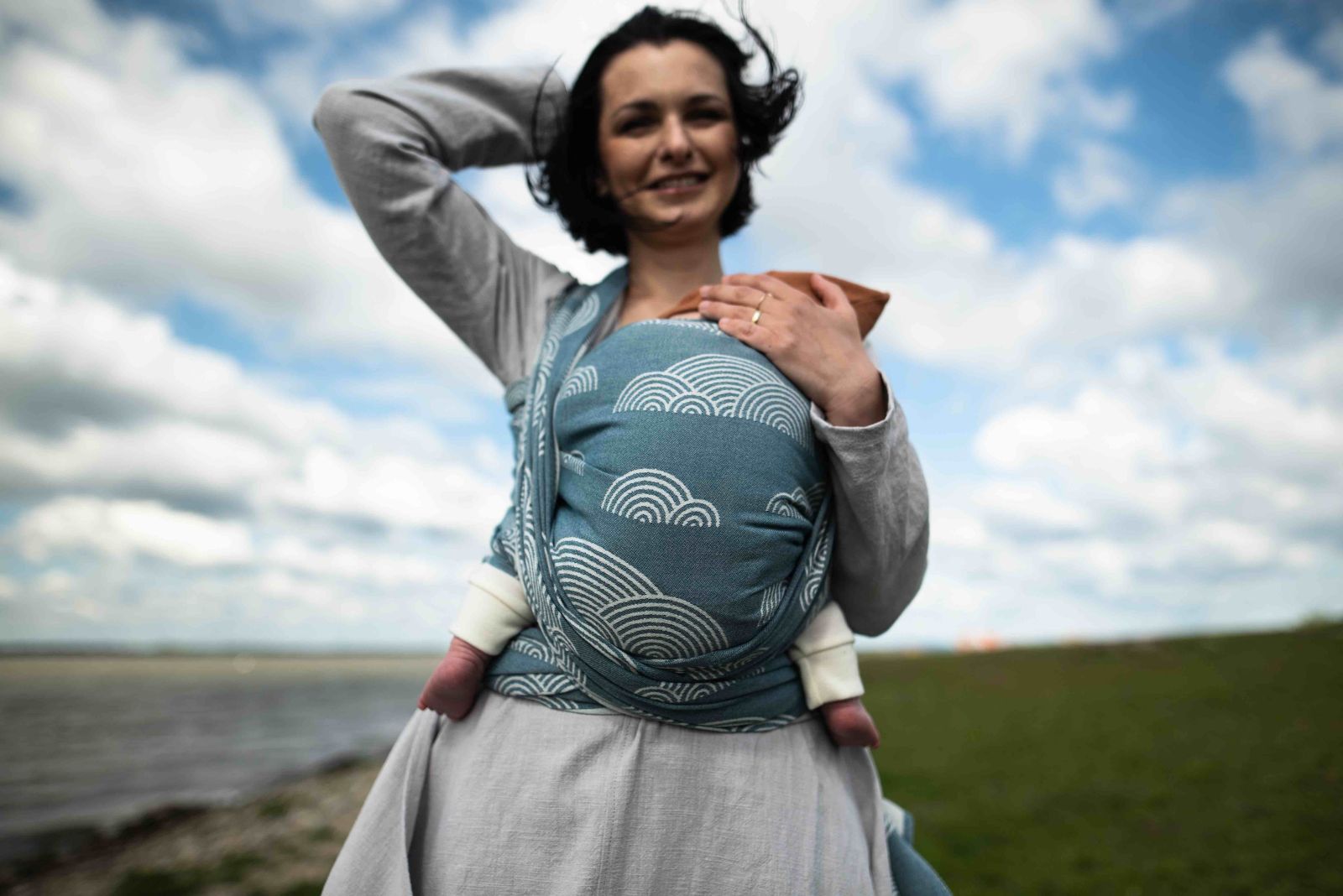
- It's a good idea to wait at least six weeks for conventional exercise. Only very simple exercises that help with improving muscle strength, flexibility and stability in the abdomen, back and pelvis are suitable during the six weeks. However, the overall recovery of the body is greatly helped by wearing the baby in a scarf. Many mothers also deal with diastasis of the abdominal muscles after childbirth. This diagnosis carries with it certain risks, so it is important to be diagnosed before you start any exercise or sport. We therefore recommend that you seek out a physiotherapist or physiotherapist, for example, and according to your individual needs, set up simple exercises just with a specialist.
- It's also a good idea to wait until after six weeks to have sex, as your body is still healing and may be more sensitive to different situations during sex. After six weeks, sex is very individual and depends on your physical and mental well-being. Either way, you don't have to feel like you have to rush it. It's quite common that you won't feel like having sex for a few more weeks or months because of breastfeeding your baby. And that's perfectly fine.
- Definitely don't rush through work or dealing with work emails either. More than one mom takes her laptop to the maternity ward and wants to use the time when the baby is sleeping just to catch up on work duties. We understand. But it's the time of six weeks that is the best time in your life, when you can afford to slow down at work too. Treat yourself and your family to it.
- Another big topic is visits. Especially family ones. Who wouldn't want to ideally see your new baby on the very first day? Few grandmas get enough of gushing over the photos you send them. For moms, these visits in the six weeks are really stressful. After all, each of them is not only trying to treat their guests, but also trying to arrange some reasonable time that won't interfere with your sleep or breastfeeding. If you're already feeling mild stress from arranging any visit, it's perfectly fine to turn family or friends away during the first few weeks. We know some may not take this well, but it's really about you and your baby now. You'll have plenty too many more opportunities to get to know your family and friends.
7. Just do it your way

We are each different and individual. Even though research and the experience of mums speaks to the advice and recommendations we mentioned above, which we have tried and tested ourselves, it doesn't mean you have to follow them to the letter.
Our recommendations are for moms who really don't know what to expect at six weeks and would like to prepare for it. They are also for mums who may have already had their first six weeks and realise that they didn't experience it the way they should have with their baby and would like to do things differently now.
How you arrange it is up to you and your needs.
We wish you to remember your six weeks especially with as much love as possible. ❤️
